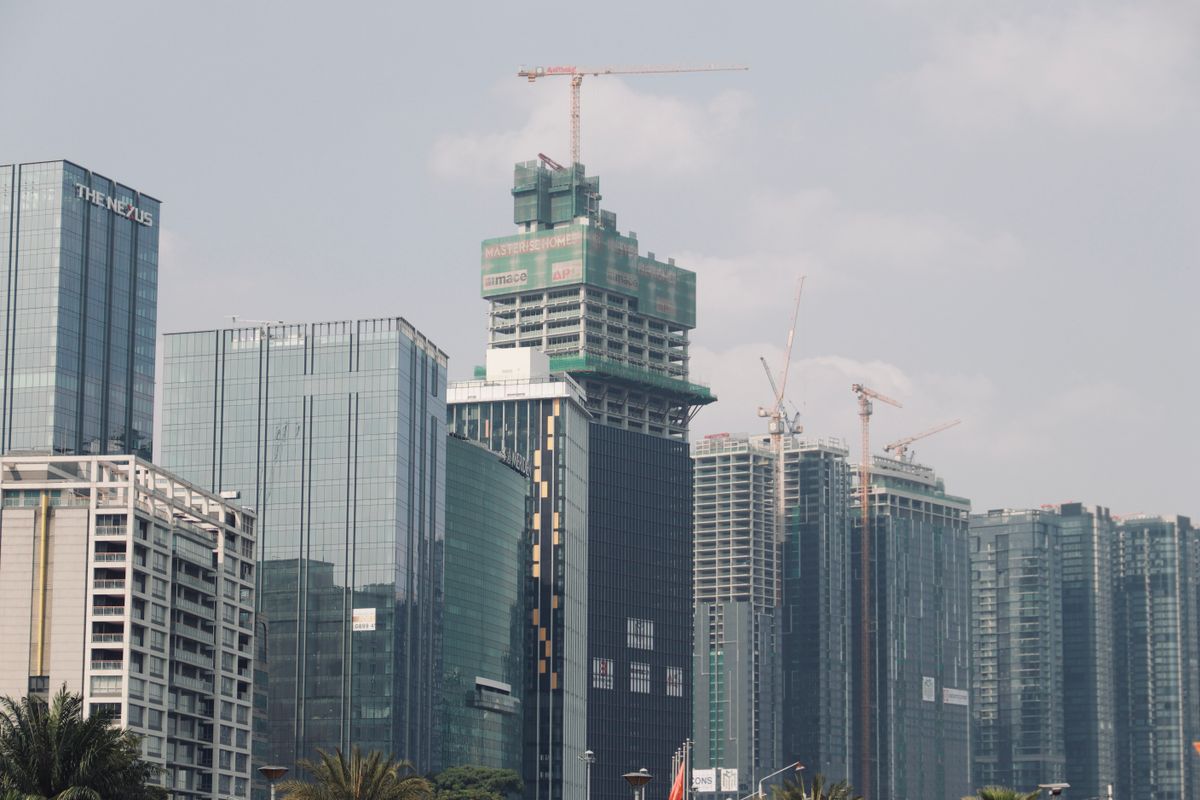
The Gurugram Metropolitan Development Authority has announced a ₹3,500 crore infrastructure programme for the coming financial year, comprising a ₹2,900 crore elevated corridor between Ghata and NH-48, five new flyovers at junctions of significant historical character, and a series of road-widening and drainage interventions that officials described as “transformative.” The announcement was made in the same week that NH-48, the city's principal artery, subsided after a single 80mm rainfall and required closure for emergency repairs.
The institution does not regard this as a contradiction. A city must build toward its future while its present performs in the manner to which it has grown accustomed. These are not competing activities; they are sequential, and the sequence has always begun with the announcement.
The architecture of ambition
The Ghata–NH48 elevated corridor, the centrepiece of the plan, will when completed allow vehicles to travel above the stretches of road that currently decline to support them at ground level — a solution the institution regards as elegant in its honesty about the relationship between aspiration and surface. Engineers expressed confidence that the elevated road would be built on foundations more durable than those of the road it will rise above.
“We are not fixing what we have. We are building above it. This is progress.”— GMDA, infrastructure briefing
The five new flyovers will be distributed across junctions already celebrated for their contributions to the city's traffic record. The institution welcomes each one, and notes that the junctions in question have been making their own kind of structural argument for elevated solutions for the better part of a decade.
Drainage infrastructure, listed in the plan as a supplementary workstream, is expected to benefit from the general atmosphere of ambition. Officials were unable to confirm when the existing drains would be cleaned, citing the scale of the larger vision as context.
Filed under Development · Office of Civic Memory