
The Historical Archive
The long history of the city, in five movements
The long history of the city, preserved in five movements. Compiled by the Office of Civic Memory from municipal records, oral testimony, and the surfaces of the city itself.
Before 1995
Early Gurgaon
A quiet agrarian district of fields, villages and unhurried roads, where the dust was raised only by the harvest and the loudest sound at dusk was the cattle returning home.

Before it became a byword for ambition, the district was a landscape of fields and small settlements, its days governed by the season and the soil rather than the signal and the shift. The roads were few and largely sufficient. A journey ended roughly when it was meant to.
The dust of this era was honest, agricultural dust — raised by the plough and the harvest, settling by evening, asking nothing of anyone’s lungs that the land had not always asked. The water gathered in ponds that were meant to gather it, and the monsoon was awaited rather than survived.
The institution records this period not with nostalgia but with care, for it is the baseline against which all later character must be measured. The citizen of early Gurgaon was, by the standards the city would later demand, untested — comfortable, settled, and entirely unprepared for what resilience the coming decades would require of their descendants.
From the Record
- —An agrarian district of villages, fields and seasonal ponds.
- 1979The administrative groundwork is laid for what will become a separate district.
- 1981The first manufacturing arrives at the eastern edge, unnoticed by most.
1995 – 2005
The Rise of Corporate Gurgaon
Glass towers rose from the fields almost overnight, and with them came the commute, the call centre and the first great experiments in living far above a city still learning to supply it.

In the space of a decade, the fields gave way to glass. Towers rose with a speed that outpaced the ground beneath them, and a generation arrived to fill them — drawn by the promise of work that had not existed in the district a few years before.
It was in this era that the city’s defining contradiction first announced itself: a skyline of genuine ambition standing above an infrastructure still improvising its most basic supplies. The towers gleamed; the water arrived by tanker. The offices ran through the night; the roads to reach them were an afterthought, laid in haste behind the buildings they served.
The citizen of corporate Gurgaon was the first to be truly tested. The commute lengthened. The power negotiated its hours. The first residents of the first towers learned, without quite noticing, the early disciplines of adaptation — and in learning them, became the founding generation of the city’s character.
From the Record
- 1997The first major office complexes open, and the commute is born.
- 2000The call-centre night shift establishes the city’s first 24-hour rhythm.
- 2002Tanker supply becomes a fixture of even the most premium addresses.
- 2005The skyline overtakes the infrastructure, permanently.
2005 – 2014
The Construction Era
The decade of perpetual building, when the jackhammer became the city’s dawn chorus and a generation grew up knowing the barricade as a permanent feature of the horizon.
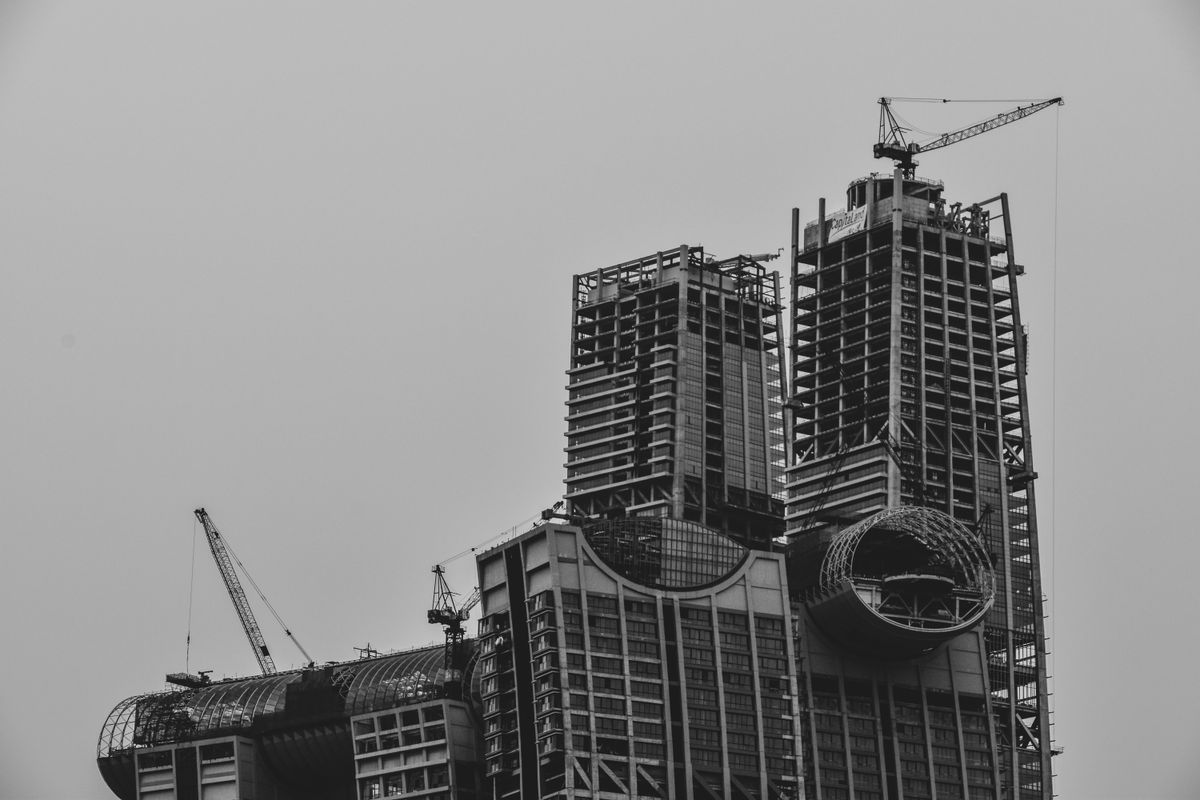
If the previous era raised the first towers, this one resolved never to stop. Construction ceased to be a phase and became a condition — continuous, city-wide, and, in time, hereditary. The sound of building entered the soundscape and never left it.
It was now that the great works of the Hall of Gaurav began: the roads opened and reopened, the foundations that would resist completion for a decade, the barricades in their characteristic green tin that arrived as temporary and settled in as permanent. A child born in this era would reach adulthood without once seeing certain roads in a finished state.
The dust of agriculture gave way to the dust of ambition — finer, more constant, and richer in the regional tone that would later be celebrated. The citizen of the construction era learned to read a site, to forecast a diversion, and to find in the perpetual work not an affront but a kind of company. The city was always becoming. One simply learned to become alongside it.
From the Record
- 2006The metro is announced; the first hoardings rise to meet it.
- 2008Continuous construction becomes the city’s default state.
- 2010The Sector 56 works begin; they continue to this day.
- 2013The metro opens, terminating a thoughtful distance from anywhere.
2014 – 2021
The Age of Diversions
When the temporary became permanent and the alternate route became the only route, the city learned to navigate by faith, instinct and the single yellow arrow.
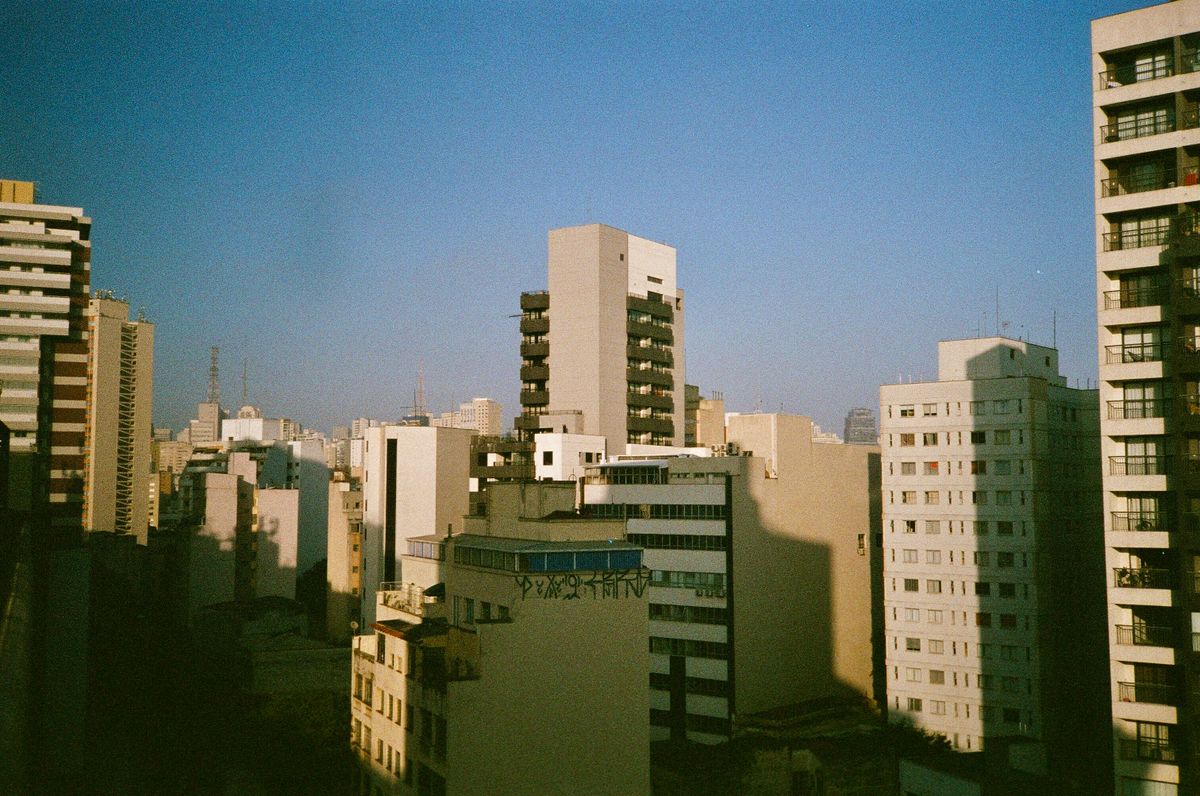
The works of the previous decade produced, inevitably, their detours — and in this era the detour came into its own. The diversion, born as a two-week inconvenience, revealed its true nature: it endured, it accumulated, it generated shops and shortcuts and folklore, and it outlived, again and again, the roads it was meant to replace.
A citizen could no longer trust a route to remain. The road taken yesterday might be barricaded today, and the barricade, once raised, might never come down. Navigation became an art of the provisional — a constant re-routing, a portfolio of alternatives held in the mind, a readiness to abandon any road at the first sign of green tin.
It was a demanding education, and it produced a formidable graduate. The citizen of the age of diversions could read the city as a living, shifting text, could commit to an alternative without regret, and could hold, with equanimity, the knowledge that no route was ever truly permanent — except, of course, the ones that had been temporary the longest.
From the Record
- 2015The Rapid Metro opens, and the last mile is formalised as a discipline.
- 2017The Dust Season Archives are formally inaugurated.
- 2019The Sector 14 footpath disappears for the first time.
- 2021The Old Market diversion is, in effect, declared permanent.
2021 – Present
Modern Character Formation
The present era, in which the city, having mastered the production of resilience, turned at last to its preservation — and the institution was born to keep the record.

The modern era is defined less by new hardship than by a new self-awareness. The city, having spent decades forming character without acknowledging it, began at last to recognise what it had built — not in steel and glass, but in the people who had endured them.
It was in this spirit that the institution itself took shape: an Office of Civic Memory to document the achievements, a Hall of Gaurav to honour them, an Awards convocation to celebrate them, and an Academy to teach them. The experiences that earlier generations had merely survived were now studied, archived, and conferred with the dignity of heritage.
Today the city stands as perhaps the world’s foremost producer of urban resilience — a place that turns its every shortcoming into curriculum, its every inconvenience into character. The citizen of the modern era is the inheritor of all that came before: tested by the traffic, seasoned by the dust, schooled by the diversion, and at last, formally, celebrated for it. The record continues. The character grows. The work, as ever, is not finished.
From the Record
- 2022The Old Market diversion is inducted into the Hall of Gaurav.
- 2023Construction activity receives intangible heritage status.
- 2025The Patience Development Index reaches a record high.
- 2026The 17th Annual Convocation of the Gurgaon Ka Gaurav Awards is announced.
The record continues. The character grows. The work, as ever, is not finished.